The Only Course that really dives into the Core of Trust.
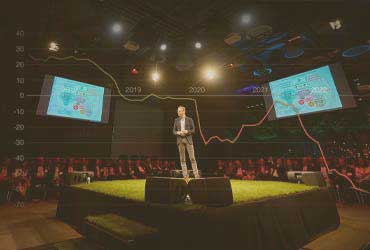
Trust (in each other and in the future) is essential for change, connection, empathy and leadership. In his lectures, bestseller author and world leading authority on trust Drs. Erik Schoppen shows the integral functioning of trust inside and outside the brain, and how future-proof trust with the right (neurochemical) perceptions, emotions and motivations leads to sustainable behavioral change.
Learn how to gain trust as a confident leader.™
Which mechanisms drive trust, and how to positively influence behavioral change in the current and future connected age? People do not only look for purpose (meaningfulness), autonomy and self-determination (personal development), but also for social contact and cooperation (within teams), and a deeper connection with the living environment as a whole (future connectedness).
Open up your mind with the latest managerial and psychological insights for leaders who take trust seriously.
There is evidence that trust between staff and workers is truly a hard, economic driver for every organization.
Learn how to identify and measure trust and use this to perform sustainably better as a high-trust organisation.
In the lectures and masterclasses you will explore the following trust topics using directly applicable knowledge.
For purposeful and sensitive leadership it is necessary to fully understand the neurobiology of trust and its role in social / digital organised interactions.
Trust systems are complex mental constructs that use neural circuitry and association networks to process cognitive, emotional, and behavioral information.
Our decision making is primarily based on (sub- conscious) automatic behaviour. This trust behaviour is stronger when it connects to what we already know.
Discover how to develop strong brand connections and association networks between people or entities, based on mutual, reciprocal interactions, dependence, or influence.
We discuss the main trust levels in organisations, increasing in network system complexity. The psychology of trust within each level has an impact on the other levels.
The day covers trust decision-making and the psychology behind (brand) trust and our (daily) trust considerations and behaviors.
Four interactive classes cover various trust concepts in an accessible and concise way, but with enough time to reflect on the matter.
No PhD in neuroscience or a background in (bio)psychology required. But simply packed with practical insights you will understand.
Besides offering summaries of the most relevant (but easy to grasp) theory, also (mind blowing) participant experiments are presented.
At the moment TRUST.MBA in 1 Day is only offered InCompany or on request. If you are interested, please call +31(0)6 50914010.
Dates, time schedules, group size and locations in consultation. Investment € 895 p.p. (ex VAT) or more economical group price.
BLOCK I (MORNING)
Coffee Break
The participant is introduced in the study of the mind (psychology) and our mental processes in relation to human trust behavior.
BLOCK II (MORNING)
Lunch
Cognitive trust is based on the ability (competence) to process and evaluate information by our senses, memory & decision making.
BLOCK III (AFTERNOON)
Coffee Break
Affective trust is founded on the emotions, motives and drives that are evoked and influenced by (ind./coll.) interactions with others.
BLOCK IV (AFTERNOON)
Reflect & Social interaction
Every lecture is tailor-made, adapted to your needs and wishes. Combinations of topics are possible. Information or bookings: trust@erikschoppen.com.
In his Trust Masterclass - which covers the human brain, our daily decisions and behaviors, trust and leadership - he shows how to build trust and deploy trust from a social, digital and sustainable (brand)management perspective.
This keynote focuses on how to restore our social, organisational, technological and societal trust systems. Trust is essential for change, social cohesion and leadership. For example, we need trust in sustainability to solve the climate crisis.
Discover how trust works in our brain. What are the biological functions of trust? Which ancient evolutionary mechanisms are behind trust, and how can you influence these? How does our brain distinguish biological and digital trust?
Discuss trust uncertainty within transformational challenges in your organization
or schedule a board consultation in the familiar environment of your own boardroom.
Sessions are always confidential. Call +31 (6) 509 140 10 for an appointment.